



Understanding Your Breast Enhancement Options
Modern cosmetic surgery offers multiple pathways to achieve fuller, shapelier breasts. The two primary breast enhancement options available today are traditional implant-based augmentation and autologous fat transfer. Each approach has distinct advantages, limitations, and ideal candidates.
- Traditional breast augmentation has been refined over decades and remains the most popular cosmetic surgery procedure worldwide. This method uses silicone or saline implants to add volume and create shape.
- Fat transfer, meanwhile, represents a more recent advancement that uses your own body fat harvested from donor areas through liposuction, then carefully injected into the breasts.
The choice between these procedures isn’t simply about which is “better” in absolute terms, but rather which aligns with your specific anatomy, goals, and preferences.
Breast Augmentation with Implants: The Traditional Approach
The breast implant procedure has helped millions of women achieve their desired breast size and shape. This surgical technique involves creating a pocket either behind the breast tissue or beneath the chest muscle, then inserting a carefully selected implant.
Modern implants come in various sizes, profiles, and materials. Silicone implants offer a natural feel and come pre-filled, while saline implants are filled during surgery and require smaller incisions. Structured saline and “gummy bear” implants provide additional options with different aesthetic and tactile properties.
The primary advantage of breast augmentation with implants is the dramatic results they deliver. Women can typically increase by two or more cup sizes in a single procedure. The results are immediately visible, and the final outcome is highly controllable, allowing precise customization of size, shape, and projection.
However, implants require more invasive surgery with longer incisions, typically along the breast crease, around the areola, or in the armpit. Recovery takes several weeks, and implants may need replacement after 10-20 years due to normal wear or complications. Some women experience capsular contracture, where scar tissue tightens around the implant, or concerns about breast implant illness, though research continues on these topics.
Breast Fat Transfer: The Natural Alternative
Breast augmentation with fat transfer offers a fundamentally different approach. This procedure combines liposuction with breast enhancement, removing unwanted fat from areas like the abdomen, thighs, or flanks, then purifying and transferring it to the breasts.
The breast fat transfer process begins with harvesting fat cells through gentle liposuction. These cells are processed to remove impurities and damaged cells, then strategically injected into multiple layers of breast tissue. The surgeon carefully places small amounts throughout the breast to ensure proper blood supply and cell survival.
The most compelling advantage of fat transfer is its completely natural result. Since the procedure uses your own tissue, the breasts feel authentic to the touch, and there’s no risk of rejection or foreign body reaction. Additionally, you benefit from body contouring in the donor areas where fat is removed.
Fat transfer also involves smaller incisions that heal with minimal scarring, shorter recovery time compared to implants, and no concerns about implant rupture, replacement, or removal. Many women appreciate that fat transfer feels more like working with their natural body rather than adding synthetic materials.
The limitations are equally important to understand. Fat transfer typically provides modest increases of one cup size or less per procedure. Some transferred fat cells don’t survive, with reabsorption rates typically between 20% and 40%. This means the final result may be smaller than immediately after surgery, and multiple sessions might be necessary to achieve the desired fullness.
Candidates must also have sufficient donor fat available for harvesting. Very lean individuals may not have adequate fat reserves for this procedure.
Comparing Safety and Longevity
Both procedures have excellent safety records when performed by qualified surgeons, but they carry different risk profiles.
- The breast implant procedure involves surgical risks like infection, bleeding, and anesthesia complications, plus implant-specific concerns like rupture, leakage, or capsular contracture.
- Fat transfer carries risks related to liposuction and fat injection, including contour irregularities, fat necrosis (death of fat cells), and the potential for calcifications that might complicate mammogram interpretation. However, because it uses your own tissue, there’s no risk of allergic reaction or rejection.
Regarding longevity, implants typically last 10-20 years before replacement might be recommended, though many women keep their implants longer without issues. Fat transfer results are permanent once the transferred cells establish a blood supply, usually after three to six months. However, significant weight fluctuations affect transferred fat just like natural breast tissue.
Working With Our Board-Certified Plastic Surgeon
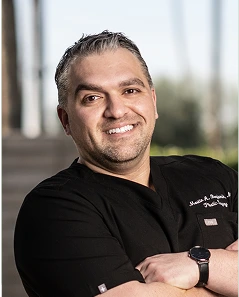
Choosing between these procedures requires professional guidance. Our board-certified plastic surgeon, Dr. Martin Benjamin, will evaluate your anatomy, discuss your aesthetic goals, review your medical history, and help you understand which option best serves your needs.
During consultation, expect a thorough examination of your breast tissue, skin quality, and overall body composition. Dr. Benjamin will discuss realistic expectations for each procedure, show before-and-after photos of similar cases, and explain the surgical process in detail.
This personalized approach ensures you receive recommendations tailored specifically to your body and objectives rather than a one-size-fits-all solution.
Making Your Decision: Key Considerations
Several factors should guide your choice between these breast enhancement procedures.
- Size goals matter significantly. If you desire a substantial volume increase (two or more cup sizes), implants are likely your best option. For subtle enhancement that maintains a natural proportion, fat transfer works beautifully.
- Body type plays a crucial role. Women with sufficient donor fat in unwanted areas find fat transfer particularly appealing since it offers dual benefits. Those with limited body fat may only have the implant option.
- Lifestyle factors include your tolerance for recovery time, comfort with foreign materials in your body, and willingness to potentially undergo multiple procedures. Active individuals might prefer fat transfer’s shorter recovery, while those wanting one definitive procedure often choose implants.
- Aesthetic preferences regarding how breasts look and feel also matter. If an entirely natural feel is paramount, fat transfer excels. If you prioritize dramatic, immediately visible results with specific shape control, implants deliver.
- Budget considerations vary by location and surgeon, but generally, implants require a single, more expensive surgery, while fat transfer might need multiple, less costly sessions to achieve the desired fullness.
The Bottom Line: Should I Choose a Breast Implant Procedure or Breast Augmentation with Fat Transfer?
The breast augmentation vs fat transfer debate ultimately comes down to your personal goals and body composition. Breast implant surgery delivers dramatic increases in breast volume with predictable, long-lasting results, making it ideal for women seeking significant enhancement of their breast shape. Natural breast augmentation through fat grafting offers a gentler alternative for those with excess fat in donor areas who desire modest improvements using their own healthy fat cells. When comparing fat transfer vs traditional implants, consider that injected fat provides an entirely organic feel but typically adds less volume per procedure than implants can achieve.
Your decision about cosmetic breast surgery should reflect both your aesthetic vision and practical considerations. Schedule a consultation with our board-certified plastic surgeon who can evaluate your unique anatomy, discuss realistic outcomes for both procedures, and help you choose the approach that best serves your needs. Whether you select implants for dramatic transformation or fat grafting for subtle, natural enhancement, the right choice is the one that aligns with your body, lifestyle, and personal definition of beauty.
Procedure Accessible