

Understanding Each Breast Procedure
Before diving into which procedure suits you better, it helps to understand what each one actually does.
A breast lift, medically known as a mastopexy, is a reshaping procedure. It removes excess skin, repositions the nipple and areola, and tightens the surrounding tissue to create a firmer, more elevated breast. It does not significantly add volume.
Breast implants, on the other hand, add volume by placing a silicone or saline implant either beneath the breast tissue or beneath the chest muscle. Implants make the breasts larger and can restore fullness lost after pregnancy or weight loss, but they do not correct significant sagging on their own.
Many patients assume implants will “lift” their breasts simply by adding volume, and while they can improve mild drooping, they are not a substitute for a proper lift when sagging is the main issue.
What Is Breast Augmentation and Who Is It For?
Breast augmentation is one of the most commonly performed cosmetic surgeries in the world, and for good reason. It delivers dramatic results for patients who want increased size and fullness. Ideal candidates are women who are satisfied with the position and shape of their breasts but want more volume. This includes women who:
Have always had naturally smaller breasts and desire a fuller look
Have lost breast volume after pregnancy or breastfeeding
Experience asymmetry between the two breasts
Want to restore proportion to their figure after significant weight loss
Augmentation alone works beautifully when the nipple sits at or above the breast fold, which is the crease where the lower breast meets the chest wall. If the nipple has dropped below that line, a lift is typically necessary to achieve a youthful, natural-looking result.
Understanding the Breast Fold and Why It Matters
The breast fold is more than an anatomical landmark. It’s one of the key measurements your surgeon uses to determine whether you need a lift, implants, or both.
When the nipple sits well above the breast fold, augmentation alone can deliver excellent results.
When the nipple falls at or below the fold, placing an implant without a lift often results in a shape sometimes described as a “Snoopy” or “waterfall” deformity, in which the implant sits high, and the breast tissue droops over it.
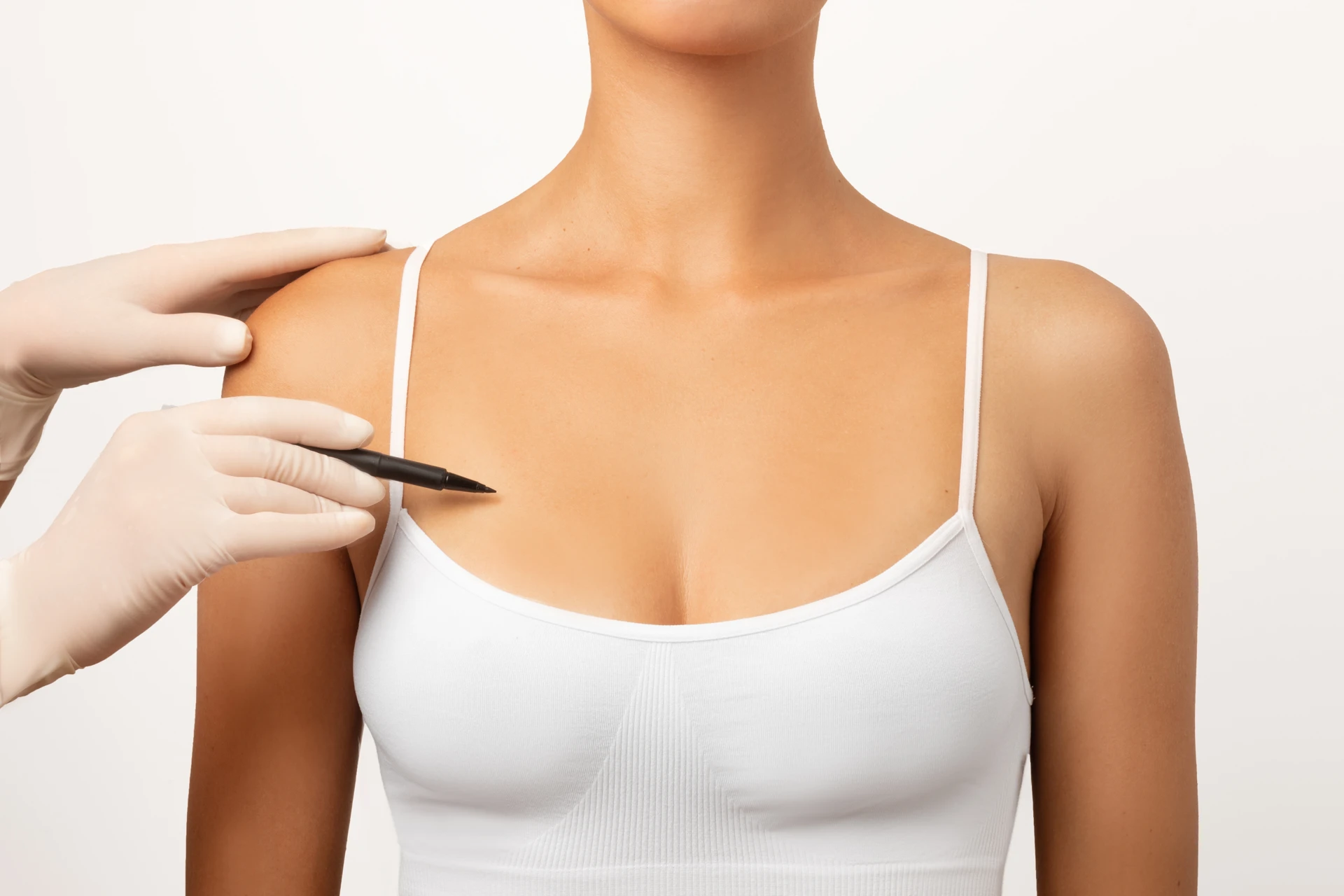
This is why photographs and in-person evaluation are so critical during your consultation. A surgeon can assess your nipple position, skin laxity, and tissue quality in a way that no online quiz or self-assessment can replicate.
Evaluating Your Breast Tissue: Skin Laxity and Volume Loss
The quality and quantity of your breast tissue determine which procedure will work best for you. Women with good skin elasticity, minimal sagging, and low natural volume tend to be excellent candidates for implants alone. Women who have experienced significant changes in breast shape due to pregnancy, breastfeeding, or weight fluctuations often have stretched skin that implants alone can’t address.
It’s also worth noting that very thin women with minimal breast tissue may find that a lift alone doesn’t create the fullness they’re hoping for, even if their shape improves dramatically. In these cases, combining both procedures is often the most satisfying solution. Your skin quality, tissue density, and the degree of ptosis (sagging) all factor into the surgical plan.
Are You a Candidate for Breast Lift Surgery?
Not everyone who wants perkier breasts actually needs a full lift, but many people who think they only need implants actually do. The clearest sign that you’re a candidate for a breast lift surgery is significant drooping, where the nipple points downward or falls below the breast fold. Other indicators include:
Breasts that appear flat or deflated rather than simply small
Nipples that point downward when unsupported
Stretched or elongated areolas
Breasts that rest low on the chest, even when wearing a bra
Loss of the rounded, upper-breast fullness that gives a youthful shape
A lift addresses all of these concerns by removing excess skin and repositioning the breast to a higher position on the chest wall. The trade-off is scarring – a lift does involve incisions, typically around the areola and down the lower breast, sometimes extending along the breast fold. A skilled surgeon minimizes and strategically places these scars, and most patients find them to fade to thin lines over time.
What to Expect from Breast Implant Surgery
Breast implant surgery is performed under general anesthesia and typically takes one to two hours. Implants are placed through small incisions, most commonly in the breast fold, around the areola, or in the armpit, and recovery usually involves a few days of rest followed by a gradual return to activity over several weeks.
Patients should expect some swelling and tightness in the first few weeks as the implants settle. The final shape typically becomes apparent within three to six months. Implants are not lifetime devices. They may need to be replaced or removed at some point, and routine monitoring is recommended.
Combining Procedures for Full Breast Enhancement
For women who want both more volume and a higher position, combining a lift with implants offers the most comprehensive transformation. This combination is particularly popular among mothers after pregnancy and breastfeeding, as it addresses both volume loss and sagging that often occur together.
Combining the procedures means one surgery, one anesthesia round, and one recovery, which most patients prefer to staging the surgeries separately. The results of a combined breast enhancement can be striking: a fuller, shapelier, more youthful-looking breast that also sits higher and projects more naturally.
Choosing a Board-Certified Plastic Surgeon
No matter which procedure you choose, the single most important decision you’ll make is who performs it. Selecting a board-certified plastic surgeon – one who is certified specifically by the American Board of Plastic Surgery – ensures that your provider has undergone rigorous training, passed comprehensive exams, and meets ongoing standards of education and ethics.
During your consultation, ask to see before-and-after photos of patients with a similar body type and concerns. Ask about complication rates, revision policies, and what the recovery process will look like for your specific plan. A great surgeon won’t pressure you toward any particular procedure – they’ll listen carefully to your goals and recommend the approach most likely to achieve them safely.
Schedule an Appointment with Dr. Benjamin
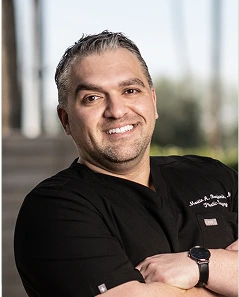
Dr. Martin Benjamin is a board-certified plastic surgeon with a reputation for delivering exceptional, natural-looking results through a highly personalized approach to care. He offers a fast-recovery breast augmentation technique that allows patients to return to their daily routines with minimal downtime, and uses Renuvion technology for advanced skin tightening when needed.
During your consultation, Dr. Benjamin uses Vetra 3D imaging to help you visualize potential outcomes before making any decisions. This powerful tool takes the guesswork out of choosing your ideal size and shape. He performs procedures using local anesthesia and deep sedation, prioritizing patient comfort and safety throughout the surgical experience. Whether you’re interested in breast augmentation combined with a lift for a complete transformation, or you’re simply exploring your options, Dr. Benjamin takes the time to thoroughly evaluate your natural breast tissue, discuss how breast augmentation increases fullness and proportion, and explain how your unique breast anatomy and breast size influence the surgical plan.
Contact our office today to schedule your consultation and take the first step toward results you’ll love.
Conclusion
Choosing between a breast lift and implants – or deciding to combine both – is a deeply personal decision that depends on your unique anatomy, goals, and lifestyle.
A breast lift procedure is the gold standard for repositioning sagging breasts, removing excess breast skin, and restoring a youthful profile by working with your existing breast tissue rather than adding to it. It is the most effective solution for breast ptosis and moderate to severe breast drooping, as it addresses the root cause: stretched skin and a breast position that has fallen below its normal position on the chest wall.
Breast augmentation focuses on a different concern entirely: increasing cup size and restoring or enhancing fullness with silicone implants or saline alternatives to complement the chest wall shape.
For women with ample breast tissue but significant sagging, a lift alone often delivers outstanding results. For women whose primary concern is volume, augmentation is the more targeted solution. When both sagging and deflation are present, combining the two procedures into a single, more involved surgical procedure gives patients the most complete transformation, addressing every dimension of breast appearance at once.
What matters most is that you approach your decision with accurate information and realistic expectations. Both procedures involve scar tissue formation as part of the natural healing process, and outcomes are influenced by factors such as skin elasticity, age, and your body’s healing process. Whether you’re looking to tighten breast tissue, restore lost volume, or simply improve your overall silhouette, today’s aesthetic breast surgery options are more refined and customizable than ever before. The most important step you can take is to have an honest consultation with a qualified surgeon who can evaluate your candidacy for a breast procedure based on your specific anatomy. When the right procedure is matched to the right patient, the results can be genuinely life-changing.